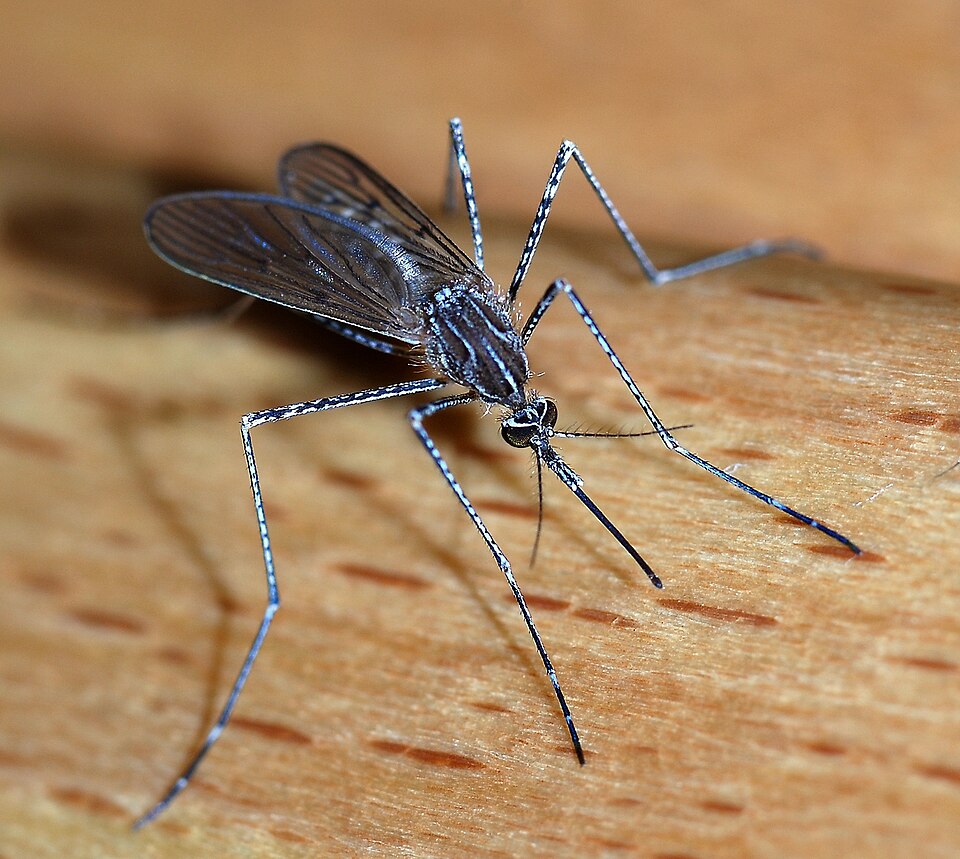
Two people in counties neighboring Cabarrus have tested positive for West Nile virus this summer, and state health officials say the region's ongoing drought is making the threat worse by pushing birds and mosquitoes toward the same shrinking water sources.
The North Carolina Department of Health and Human Services confirmed that a Gaston County resident contracted the state's first human case of West Nile virus disease in 2026. A Mecklenburg County blood donor also tested positive through routine screening, according to an NCDHHS press release posted by Gaston County government.
No additional details about either person were released.
The cases come after mosquitoes collected in Cabarrus, Forsyth and Mecklenburg counties all tested positive for the virus during July. NCDHHS said those results came earlier in the season than in past years.
As we reported Aug. 8, Cabarrus Health Alliance detected West Nile virus in mosquitoes its Environmental Health staff collected July 8, July 16 and July 20. The State Laboratory of Public Health confirmed the results July 30.
Why drought makes it worse
Michael Doyle, a public health entomologist with NCDHHS, said the connection between dry weather and mosquito-borne illness surprises most people.
"They both need water, and they tend to congregate in the same places," Doyle told Queen City News on Aug. 6. "We call it the oasis effect. They transfer the disease back and forth between mosquitoes and birds until it amplifies so much that one of those mosquitoes bites a person and they become ill."
Warm temperatures associated with drought also speed viral replication inside mosquitoes, Doyle said. The primary species that carries West Nile in the Charlotte region does not begin biting until roughly an hour after sunset.
Cabarrus County was classified as D2 (Severe Drought) on July 23 and improved slightly to D1 (Moderate Drought) by July 28, according to the NC Drought Management Advisory Council. As of that date, all 100 North Carolina counties remained under some level of drought or abnormally dry conditions. Concord and Kannapolis have been under Level 2 mandatory water restrictions since May 15.
What residents can do
There is no vaccine for West Nile virus and no medication to treat it after infection. Most infected people never develop symptoms, but about one in five will experience fever, headache, body aches and joint pain. About one in 150 will develop serious neurological illness, including seizures or paralysis. Older adults and those with weakened immune systems face the greatest risk.
NCDHHS recommends using EPA-registered insect repellents, wearing long sleeves and pants during extended time outdoors, and eliminating standing water where mosquitoes breed.
CHA advises the "tip and toss" method once per week: emptying flowerpots, children's toys, wading pools, buckets and any container that holds water. Bird baths and pet bowls should be changed at least twice a week.
Free mosquito dunks are available to Cabarrus County residents at CHA's Brown Mill and Kannapolis locations on a first-come, first-served basis. Residents can also call CHA's Environmental Health Department at (704) 920-1207 or submit a mosquito service request at cabarrushealth.org/176/Mosquito-Prevention. The West Nile virus transmission season runs through October.