North Carolina high schoolers will no longer need to pass Math 3 to graduate under new standards the State Board of Education approved without opposition Thursday, Oct. 1.
The vote replaces Math 3 and Math 4 with pathway electives starting in the 2028-29 school year. For the more than 35,000 students in Cabarrus County Schools, the change means students at Concord, Cox Mill, Hickory Ridge and every other district high school will pick two math electives after finishing Math 1 and Math 2.
It is the first update to North Carolina's math standards since 2017.
Students will still complete four math credits, more than most states require, WRAL reported. School counselors will help guide choices based on whether a student plans to attend college, enter the workforce or join the military.
The eight elective options include Applied Statistics and Data Science, Mathematical and Statistical Modeling, Applied Logic and Reasoning (formerly Discrete Mathematics for Computer Science), AP Precalculus, AP Statistics, AP Calculus and approved International Baccalaureate or college-level courses.
Two of those are brand-new. Applied Statistics and Data Science focuses on using data to solve problems. Mathematical and Statistical Modeling blends statistics with applied math and asks students to evaluate choices using data.
Charles Aiken, section chief of math, science and STEM in the state Department of Public Instruction's Office of Teaching and Learning, told the board that employers increasingly say calculus matters less than statistics and data analytics, according to the News & Observer.
Sunghwan Byun, an assistant professor in the NC State University College of Education who directs the university's Education Research for Data Science and AI Academy, said the old standards placed too much weight on preparing students for college calculus. "But in the past 10 years, a lot happened, especially the emergence of data science, and more recently we have now AI," Byun told WRAL.
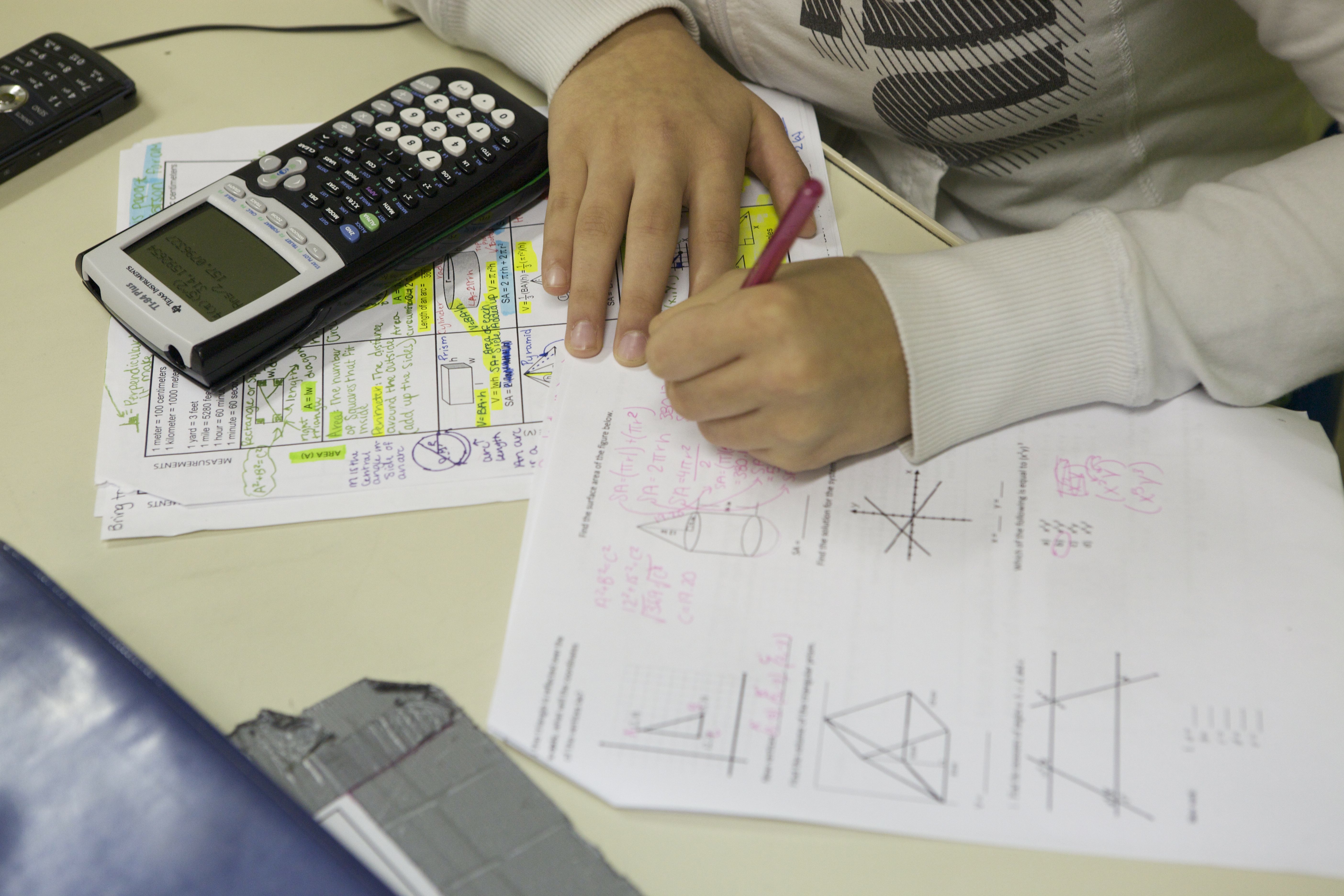
Math 1 covers algebra. Math 2 covers geometry. Both will be overhauled to emphasize real-world applications and integrate technology such as graphing calculators and artificial intelligence into classwork.
A team of about 48 people developed the new standards after collecting roughly 5,700 survey responses, WSOC-TV reported. A Department of Public Instruction survey of teachers found far less satisfaction with the existing curriculum among those teaching upper-level courses.
North Carolina is among more than 20 states reworking how they teach math, according to WRAL. Several are working with the Charles A. Dana Center at the University of Texas at Austin on new high school pathways.
The state plans to spend the next two years training teachers before the 2028-29 launch.